Interviewer
If you were given unlimited funding to design a system for storing and preserving digital information for at least a century, what would you do?
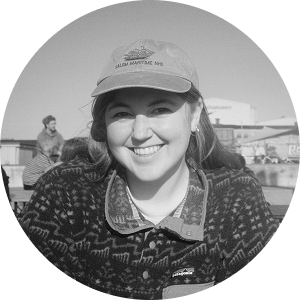
Katie Mackinnon
I would devote a lot of the funding to the decision-making processes around what gets to last for 100 years, who gets to decide, and why? Infrastructure, materiality, and formats are all important, but I think there’s already so much work in those areas.
One of the projects that I’m working on looks into “deep time” data archives, where massive tech companies have been playing around with experimental storage formats like ceramics, microfilm, and glass to see how they can preserve data over long periods. They publicly claim different temporalities between 500 to 1,000 years, even up to 10,000 years or “forever,” but the data that they’re preserving is completely black boxed. We don’t really know what gets brought into those types of architectures. It’s a place where I would like to see more critical interventions.
I’m also really interested right now in community-oriented grassroots data preservation projects that are completely underfunded. How distributed they can be, part of wider networks where they share their innovations, ideas, and approaches. I would like to see them brought into these institutional conversations around keeping data forever.
We are living in an era of accumulation.
Interviewer
Can you give an example of a grassroots data practice you’re interested in?
Katie Mackinnon
Take for example the data purges in the US over the last year from databases like data.gov, and the surge of archiving practices like the Data Rescue Project and others, each operating separately within their own institutions while also being part of this decentralized umbrella. I found this type of emergency response to the systematic removal of scientific data from government databases with the emergence of a new presidency really striking. An event that triggers a response, an archival response, and the ability of people to do something about a crisis in a very short amount of time with the resources that they have.
I think there’s something really interesting in the types of communication approaches they have used. Some of it was very public on platforms like Blue Sky, but also emergency town halls, Zoom calls, organizing through Google Docs and spreadsheets, and using chat room-style infrastructures to discuss and coordinate which types of data needed to be targeted or not. It is a type of transparency and clarity. I personally enjoy what I’d call a forensic scrappiness.
Efforts like this are often more attuned to the needs of the specific community, group, or event that they’re representing. They let these specific needs dictate the ingestion of data in a more grounded way that isn’t necessarily just an automated crawl, but something directed with a focus and purpose that sets it apart from other types of digital collection practices. There is this revisiting and rediscovering of data materials, a state of flow rather than an ingestion of data that’s only going one direction. Where instead of just collecting and burying, there is consideration and reconsideration amongst many stakeholders.
Interviewer
What happens to these efforts when there’s generational turnover? I’m curious how you think about the question of what happens to a governance structure or to a community when it goes on for long enough that people get old and move on?
Katie Mackinnon
Another area that I am working on is software preservation. I am looking not at efforts to prevent software from dying, but what it means for software to “end.” There’s so many projects where software is totally abandoned, where it can’t be repaired and it’s just sort of left out to end.
I think that these endings are actually fine, and also worth noticing because there’s so many different reasons why software ends. It’s not just about the code not being operable, but all these other factors. It invites us to think about the afterlives of these systems where it’s not really about preserving what it was, but rather thinking of it more ecologically. What networks did it sit within? What social relationships were influenced by its presence?
We are playing around with this idea of hospicing software, a metabolic literacy of how to think about the emergence and ending of software. This is not a data-centric vision, but something else. This also includes when people age, because that’s often why things don’t get updated or maintained. The person who was doing it isn’t there anymore.In his interview, Tyler McMullen wondered where the next generation of leaders for still-important web governance organizations will come from. Every single archiving operation is attached to the people working on it. You’re always going to have this type of aging process. Instead of trying to fight against that, it’s figuring out the best way for it to end.
Interviewer
What in your life and work informed your answer to these questions?
Katie Mackinnon
I’ve grown up the past 30 years online. So much of my life has taken place through these proprietary platforms. Yet I have very little control over what’s happening to all of that data, whether or not it becomes archived, which things from my life are or aren’t represented. I think we are all living in this complex sort of relationship, full of tensions, where we both want these platforms to persist and want them to die, depending on what it is and where it is and what it’s connected to at that moment. We are living in an era of accumulation. I’m interested in not only the politics of loss, but also in the technologies that have the capacities to store and preserve, whether or not they’re intending to do archival work. So that all informs my interests, my passion in thinking about archives and their politics, data just subsumed by these massive corporations, the power embedded in these systems and who gets to directly engage with that and who does not.