Authors:
Jacqueline J. Dearborn and Jennifer ChapmanPublished:
JJ Dearborn and Jennifer Chapman are current Public Data Project Fellows at the Library Innovation Lab, spearheading an R&D project on international data infrastructure. They share some of their initial thoughts here.
Libraries play a fundamental role in creating open, sustainable information spaces—and technology extends these principles far beyond the walls of a library. We begin with the premise that public data is a shared inheritance for future generations, and that global data stewardship is a shared responsibility.
For many of us working with public data we have been in emergency mode: trying to save what we can with whatever resources we have. This project builds upon those efforts by looking beyond the current emergency and researching the long-term solutions that protect the investments already made in public data.
We have embarked on a concentrated research and development project to assess the current state of international data infrastructure asking: What will it take to steward humanity’s public data for centuries and at global scale?
Today, the infrastructure supporting public data is fragile: fragmented, geographically concentrated, and persistently and acutely underfunded. Moreover, the human expertise required to sustain decades of investment in infrastructure is also increasingly at risk. When the systems, resources, and people responsible for maintaining public data are unable to sustain that infrastructure over time, data becomes vulnerable to loss. It is a challenge that requires understanding the interactions among multiple factors:
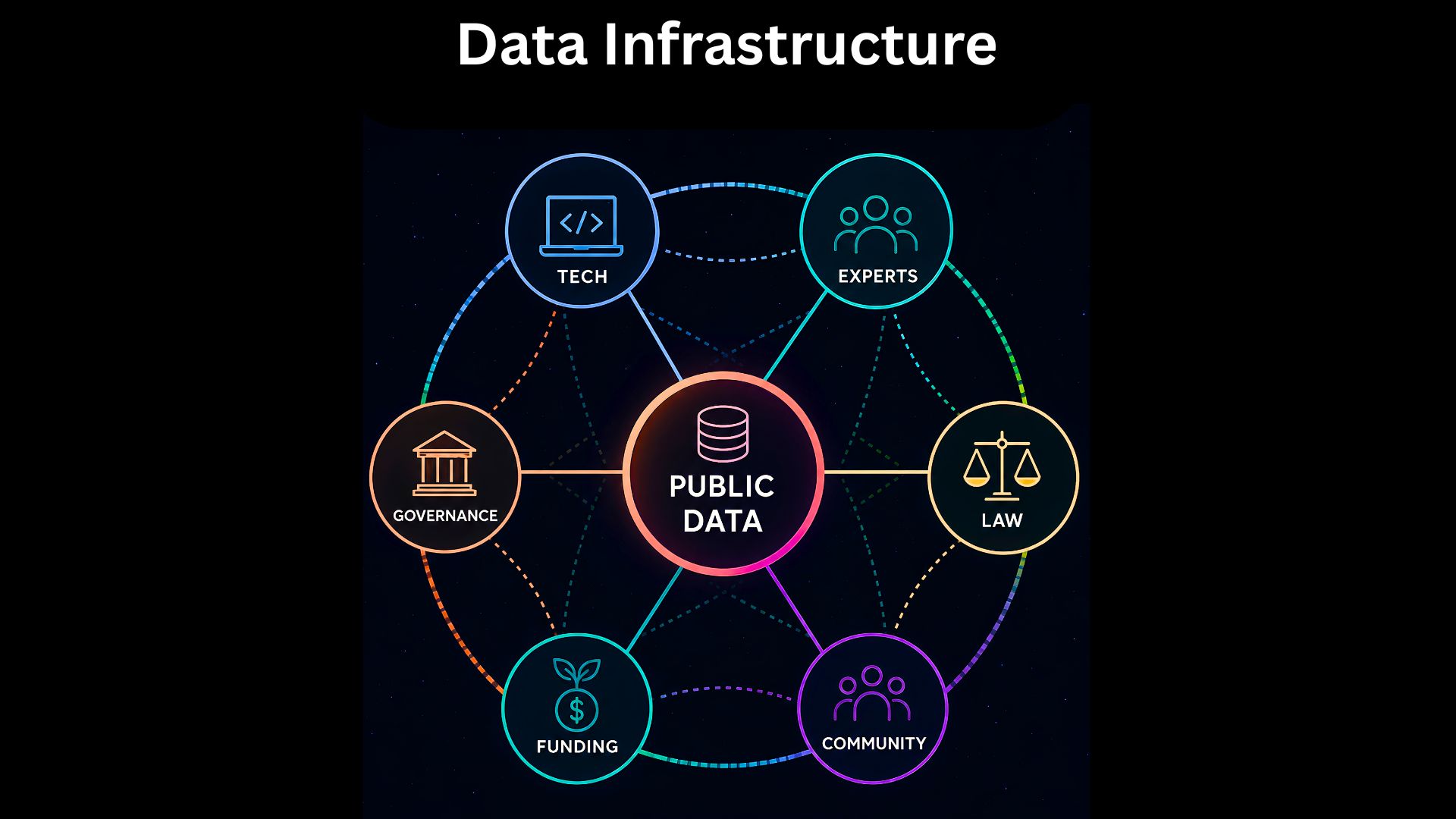
We are investigating what it will take to make globally distributed stewardship of public knowledge practical. By reviewing the research, interviewing practitioners, prototyping tools, and mapping the existing infrastructure landscape we are identifying gaps, connecting efforts currently operating in isolation, and developing working models for shared stewardship that build on the work already underway across the field.
In particular, we are exploring how the principles of distributed preservation embodied by LOCKSS (“Lots of Copies Keep Stuff Safe”) can move from proven preservation practice to a globally adopted model of distributed stewardship. Specifically, we are asking, could new transnational models–for data storage relationships, replication protocols, interoperable standards, governance commitments, mutual-aid, and collective fiscal responsibility–become durable components of tomorrow’s global data landscape?

Global Data Stewardship & the Law
A primary focus of this R&D phase is researching legal structures and governance agreements that both support and hinder large scale, global safeguarding and sharing of data. This is a particularly complicated time to examine this issue from a legal perspective because the international legal order that was, for good or bad, significantly supported by the United States is crumbling. The same systems that supported this U.S.-backed international legal order also helped support the global information environment. As international law structures collapse they reveal a complex, fragmented, fragile global information ecosystem.
At the same time, quickly evolving technologies, like generative AI and surveillance systems, are stimulating discussions about privacy frameworks and ways to regulate technologies that cross borders. Though these complications present barriers to developing sustainable global data access, they are also opportunities to transform, reimagine, and rebuild information structures to support a more inclusive, sustainable global data ecosystem.
Jennifer has been examining the impact of the changing global legal order on access to information in her research and scholarship and brings this knowledge to this R&D initiative. During the kick-off of the R&D project she presented her paper, “Responding to the Global Access to Information Crisis through Sustainable Information Access Goals (SIAGs).” Jennifer’s paper examines the destructive confluence of direct attacks on information access and the indirect impacts of the collapsing international legal order on access to information globally and proposes the creation of Sustainable Information Access Goals to help stakeholders globally develop resilient and sustainable collections.
The current disruption of the international legal order and global information systems force us to re-examine what long-term stewardship of public data should look like. In just one generation, public and philanthropic investment has made public data digitally open and accessible, transforming research, technology, and education. It has yielded tremendous societal benefit. With this shared resource under strain, decades of progress are at risk. The question now is whether we are willing to invest to ensure that this common inheritance survives us and continues to serve future generations?
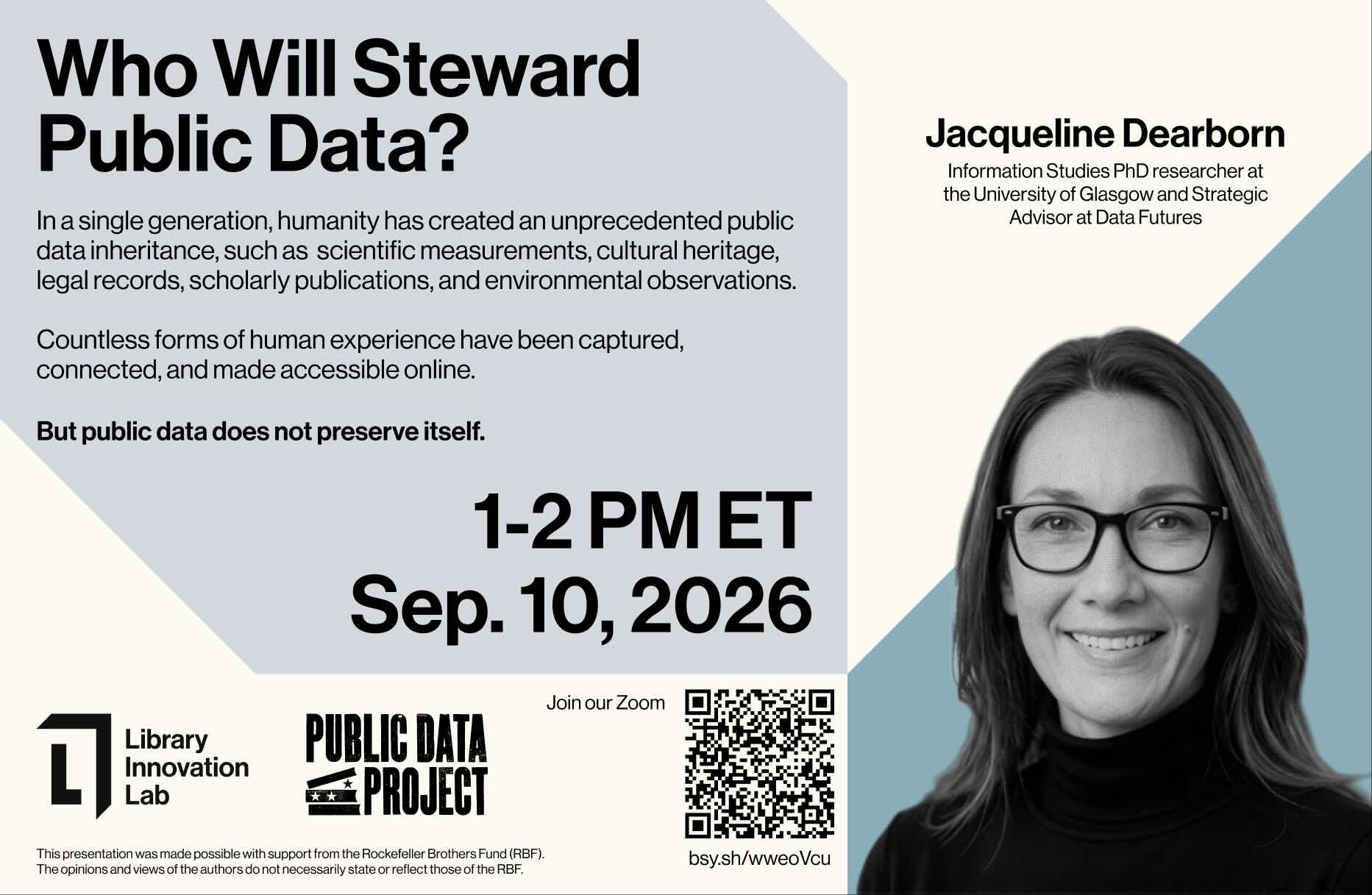
Join us for JJ’s upcoming talk, Who Will Steward Humanity’s Public Data? Collective Global Stewardship for the Long Horizon where we invite you to imagine and build a different future with us: a knowledge ecosystem where stewardship is a shared responsibility, resilience is designed into our systems, and communities around the world have the opportunity to contribute to and benefit from humanity’s public data commonwealth.
We are grateful for the support of the Rockefeller Brothers Fund. The opinions and views here do not necessarily state or reflect those of the contributors.