Author:
Molly HardyPublished:
On October 1, 2026, the Library Innovation Lab’s Public Data Project hosted a panel of legal, technological, and policy experts at the Lewis International Law Center to consider how preservation of and access to US Census data can be appreciated and reimagined. The transcript below has been lightly edited for clarity.
Panelists:
- danah boyd, Professor of Communications, Cornell University
- Cynthia Dwork, Professor of Computer Science, Harvard University
- Ruth Greenwood, Assistant Clinical Professor of Law, Harvard Law School
- Jayshree Sarathy, Assistant Professor of Computer Science, Northeastern University
- Moderator: Molly Hardy, Project Lead, Public Data Project
Welcome
Amanda Watson: I’m Amanda Watson, the Dean for Library and Information here at Harvard Law School. Many years ago, I was sitting at a table with authors and editors, and we were playing a little game, and one of the questions was, “What’s the most niche hobby you have?” And I said, “Well, I really love census data, and I like to take it and figure out things like how close one thing is to another and what it might mean.” And a man who was written up in the New York Times for doing the Sunday New York Times crossword puzzle in pen said, “Wow, so you’re like a nerd’s nerd.”
There are a lot of things I can say to welcome this panel and start this event, but the thing I want to say is, to all of you nerds’ nerds in this sanctuary for nerds, with another sanctuary for nerds behind us: thank goodness we still care about the census. That we care to ask the question, who are we? That we care to count, and then let brilliant people do things with that data and information. We don’t always get it right, but that we still care to ask, I think, is so pivotal. So I want to just say, hey, let’s nerd out together and celebrate the census and talk about why this matters to us and how we can move forward. I’ll send it to Molly now, and thank you all again for being here.
Molly Hardy: Thanks, Amanda, for inspiring words, always. And thank you to our audience, both here in the room and online, for being here today. And most of all, thank you to our panelists, who have taken time out of their busy schedules to discuss important matters with us. So many factors converge to make this the right time for the Public Data Project to host this event. Some are joyous and some are less so.
I’ll start with the good news. First, danah boyd’s book Data Are Made Not Found: A Story of Politics, Power, and the Civil Servants Who Saved the US Census (2026) has just come out. If you’re in the area, please join her tonight at the Harvard Bookstore, where she will be in conversation with Yochai Benkler, the Berkman Professor of Entrepreneurial Legal Studies at Harvard Law School.
I’m also pleased to share that our friends at the Internet Archive’s Democracy’s Library have just digitized microfilms of the census from 1790 to 1930, as well as the Indian census rolls of 1885 to 1940. This film was originally produced by the National Archives and Records Administration. The collection holds 24,320 items and more than 47.8 million page images, and it is a delightful treasure trove for researchers of all types.
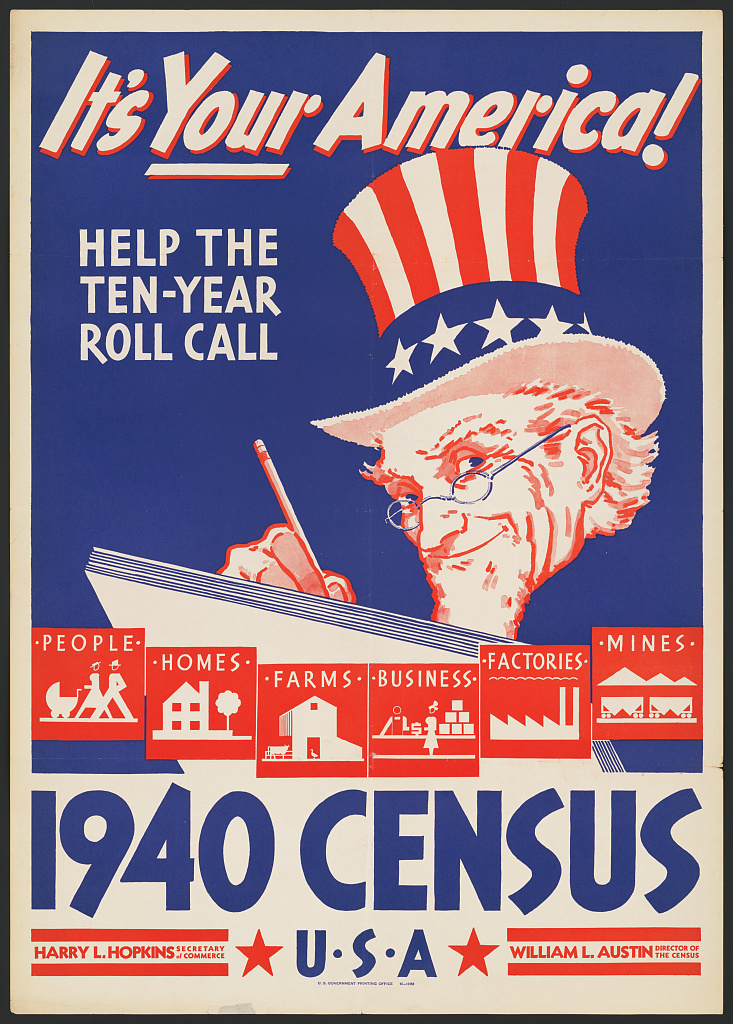
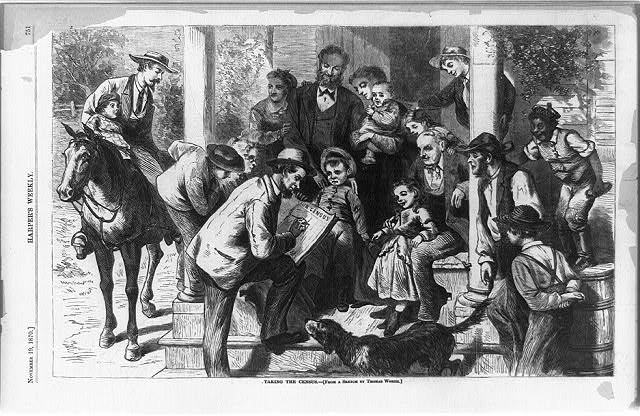
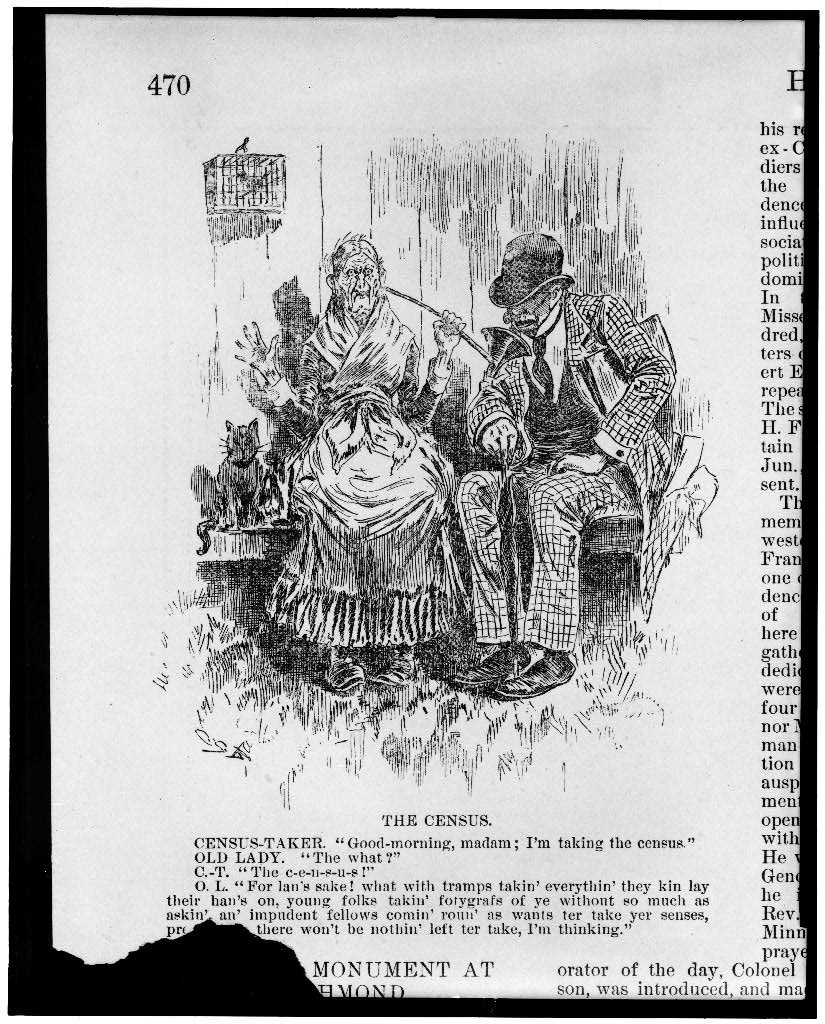
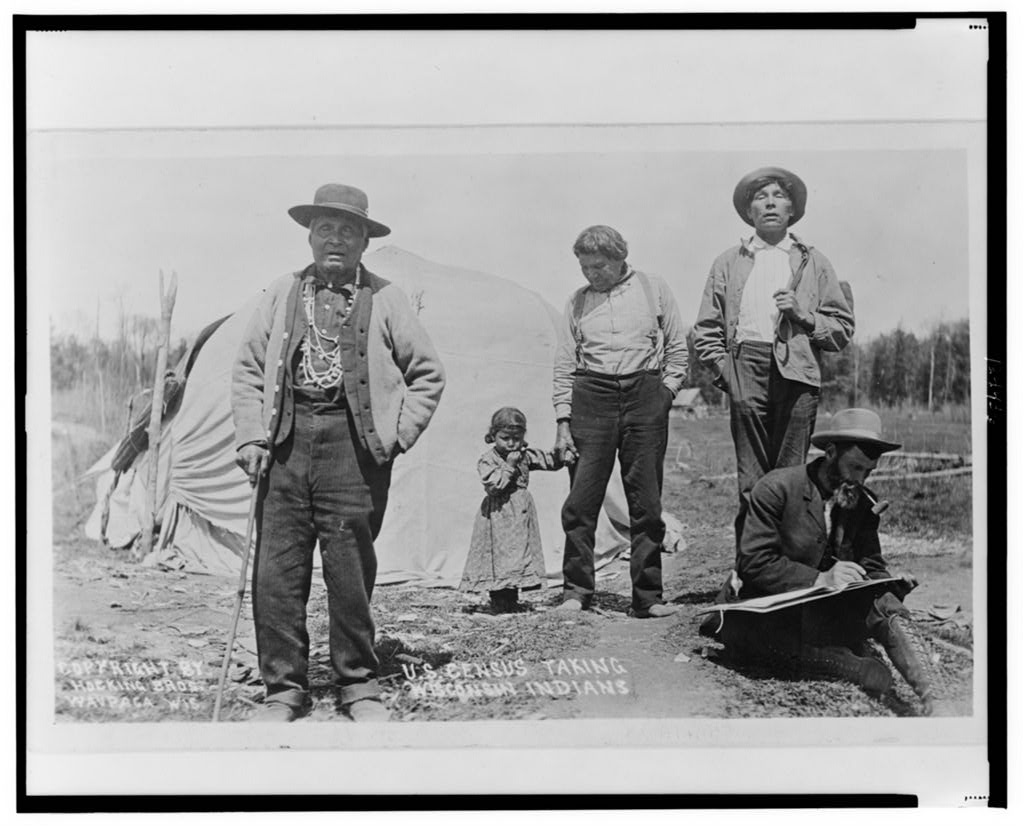
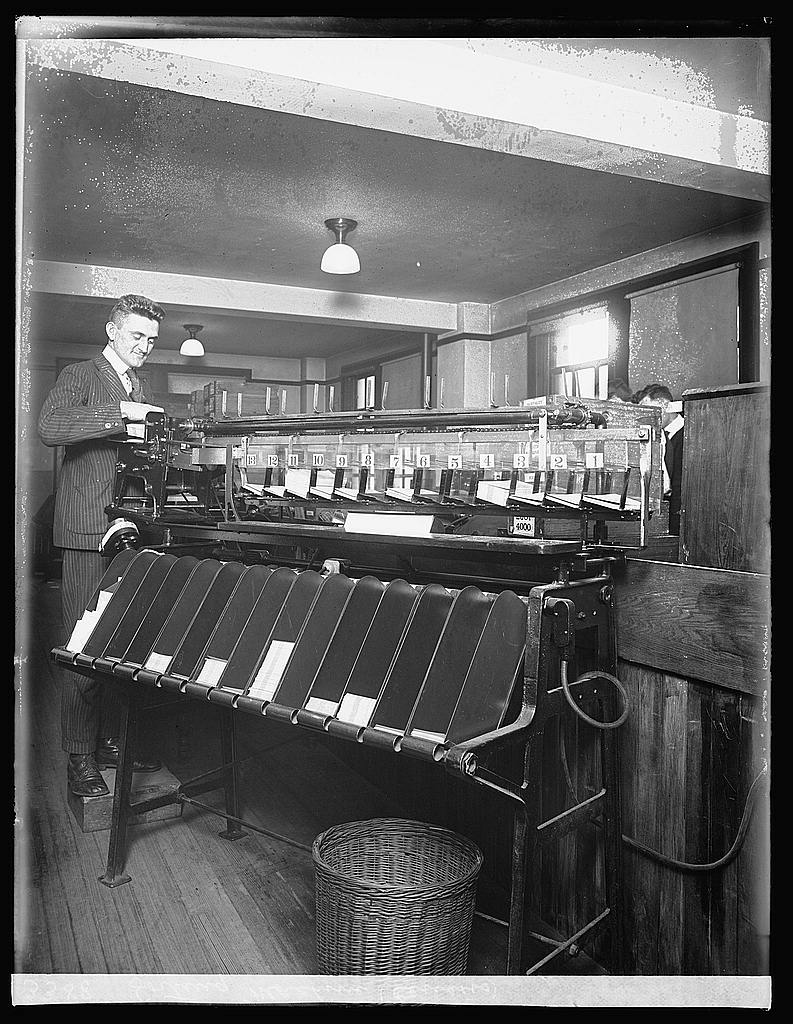
Behind us, you’re seeing a selection of photographs from the Library of Congress that will slowly move through as we discuss today. Just some of my favorite images of census workers at their job. I thought it was a particularly good tribute in light of the subject of danah’s book, which is, of course, the civil servants.
Now for the not-so-great news. The census has come under scrutiny, and not the good kind of scrutiny. The Office of Management and Budget is reviewing significant changes for the 2030 collections: one, reclassifying noncitizens as nonresidents; two, a rollback of race and ethnicity data collection standards; and three, the addition of a citizenship question. Changes to privacy protection have also been proposed, and those changes would have profound effects on how much census data can be shared.
Groups are mobilizing to call attention to the perils of these changes. If you’ve not already, I encourage you to check out a couple of them, Hands Off Our Census and The Census Counts. I’m mentioning just a few of the groups who are mobilizing as the October 13 public comment deadline draws near.
The census contains multitudes, both literal and figurative. We’re honored today to be joined by leading lights to help us place in perspective what a threat to the collection, as well as the preservation of and access to, this vital dataset must mean, and how it should be appreciated and reimagined. At this moment, I can think of no better way to appreciate public data anew as we testify and retestify to the census’s importance as what Dan Bouk simply refers to as “democracy’s data.”
Panelist Introductions
Molly Hardy: Now, without further ado, I’m going to turn to the panelists, introducing them and then asking each to share their own professional contributions and work with the census and how we understand it. All four of our panelists are incredibly accomplished, so please pardon me for keeping introductions short so that we can proceed to the heart of the matter.
First, we’ll hear from danah boyd, who is the Gary Gay Professor of Communication at Cornell University. Dr. boyd’s research focuses on the intersections of technology and society, with an eye towards how structural inequalities shape and are shaped by technologies. How fitting, then, that her latest book, Data Are Made, Not Found, is a story of the civil servants who work tirelessly, and increasingly under duress, to produce the census.
Next, we’ll hear from Cynthia Dwork, who is the Gordon McKay Professor of Computer Science here at Harvard at the John A. Paulson School of Engineering and Applied Sciences, and an affiliated faculty member here at the law school. Many of you know Cynthia for her pioneering work in differential privacy and its applications in protecting personal privacy in the census.
I encourage you to check out the editorial she published this summer in The Boston Globe, co-authored with our next panelist, Ruth Greenwood, who is an assistant clinical professor and director of the Election Law Clinic here at Harvard Law School. An expert in both election law and redistricting, Ruth previously co-directed Voting Rights and Redistricting at the Campaign Legal Center. She was lead counsel for voting rights at the Chicago Lawyers’ Committee for Civil Rights Under Law and was a redistricting fellow with the Democratic National Committee’s Voting Rights Institute.
And finally, a welcome home to Jayshree Sarathy, Assistant Professor of Computer Science at Northeastern University. Jayshree completed her PhD here at Harvard in Computer Science, where she was advised by Salil Vadhan and Jonathan Zittrain. And just to bring things full circle, in 2022, Jayshree and danah jointly published an article titled “Differential Perspectives: Epistemic Disconnects Surrounding the US Census Bureau’s Use of Differential Privacy.” Her work focuses on the sociotechnical dynamics of data science, with a focus on privacy, trust, and data access, all areas very germane to our conversation today.
So let’s please get started with danah — if you could just start by telling us about your engagements with the census.
danah boyd: Sure. Thank you all for coming out today. Indeed, this book came out last Thursday. I’m an ethnographer, which means that my work is to think about mapping cultural practice. This book is the culmination of 10 years of trying to understand what makes data legitimate, in the most high-stakes data we have. After all, if you think about it, it is a very weird thing that we have actually architected the US Constitution to anchor our representative democracy in the idea of collecting data and allocating political power accordingly.
And so for the last 230-plus years, we’ve embarked on this project of how to understand who our country is in the form of the population. This has had lots of crazy twists and turns. Margo Anderson wrote a brilliant book about the social history of the US census, so if you want to understand its history, because it’s crazy, everything you thought you understood about the US, you can actually read through the census. It’s fun.
But my goal was to understand what it takes to actually do this in real time. So I embedded inside the US Census Bureau to really appreciate what they were doing. Part of it is the recognition that we don’t often acknowledge the important work that civil servants do. They are the invisible workers. They are the people that just do the work on behalf of the American people, but they are constantly maligned.
I grew up in this country constantly being told that civil servants were stupid or malevolent, incompetent, that it could be done better by industry, that this is just the deep state. You’ve heard all of it. And civil servants unfortunately often even believe it, which is actually terrifying. But these people are so dedicated to a mission: let’s make certain that we have the best count possible. And so I wanted to tell their story. This book is character-driven. It tells their story in different ways through the various ups and downs of the 2020 census. So if you want to know about citizenship, if you want to know about residence rules, if you want to know about differential privacy, it’s here for you.
For the arguments in this book, I have three threads, and I want to highlight them to give you a sense. The first is that data are made, not found. That’s the title. But the point is that it’s not just, “Oh, the categories are socially constructed.” It’s a series of ongoing decisions, made with an eye to making the best data possible. To make that really concrete, I went back to 1880 — I was just too lazy to go further — and I looked from 1880 to 1950 at the age variable, how old are you, within census data. And it turns out that you get these spikes in years ending in zero and five, because humans round their age. They’re not 72, they’re 70.
And they don’t just round about their own age. They round about their housemate’s age. They round about their neighbor’s age. They don’t tell enumerators their actual age, and the enumerators are often too scared to ask them details. So they just look at you and are like, “You look like you’re 50. That sounds good.” And we move on. The Census Bureau receives this data, and if they published it as is, people would think they were nuts. So they go through all of these procedures, not just collecting the data but figuring out how to make it into democracy’s data. That’s the first big through line.
The next big through line is an argument about Jenga politics, which is going to be relevant today. Jenga is that wooden tower. Think about it as our administrative state, as people have been taking out pieces from it and adding pressure on top. People have been doing this for all sorts of different reasons, both Republicans and Democrats, for a long time. I tell lots of cases of where this occurs, where help is not helpful. Things that will also upend your idea of, “Oh, but participatory engagement, this is really helpful” — except when it’s not.
Civil servants are running around trying to keep that wobbly tower from falling over, but they need help. And I’d like to remind everybody, somebody will get blamed when the tower falls, and people will celebrate because it’s not their political party or whatever, but we all lose, and we all contributed to it. We need to understand how this Jenga tower is falling apart. If we care about democracy, and if we care about data, this becomes really important.
The final through line has to do with what makes data legitimate. You might have heard lots of stories about the 2020 census. You might be convinced that it was a terrible census. Here’s the thing: the data for the 2020 census were better than all data collected in the 19th and 20th centuries by the censuses. They were maybe more problematic than what happened in 2000 and 2010. But when you interrogate that, it turns out the problem is not differential privacy. It is not radical malfeasance or political dynamics. It is that a pandemic is a problem. It’s really hard to collect data during a pandemic.
The legitimacy of data isn’t rooted in some magical metric of data quality. It’s rooted in the social fabric that we build, the trust infrastructure, the ways we understand the systems.
But what does it mean that we believe these data to be crap? It’s really important to understand the consequences of our delegitimization of this. The legitimacy of data isn’t rooted in some magical metric of data quality. It’s rooted in the social fabric that we build, the trust infrastructure, the ways we understand the systems. I try to help you see which attacks on legitimacy are attacks on the social fabric. Because if we want to have nice things, we have to attend to the social fabric and not just think that it’s going to get magically fixed through law or through policy. It is going to be a lot of relational work, and that is as true for our data as it is for our broader political polarization issues.
Cynthia Dwork: So why don’t we start with what differential privacy is, because you may or may not know. Differential privacy is a mathematical guarantee. It says that the outcome of any statistical analysis is essentially equally likely whether any individual opts in or opts out of the dataset. So where does this likelihood come from?
The answer is we achieve differential privacy by the introduction of carefully calibrated noise. If the true answer for some enumeration is, say, 10,000, you might get an output of 10,002 or 9,996. And if the true enumeration is 10,001, you might also get those same numbers, just with slightly different probabilities. That’s where the randomness comes in, and that’s what “essentially equally likely” means. In the context of the census, this means that any collection of published statistics is essentially equally likely whether you chose to respond to the census or you decided not to. That’s all.
The idea is that if outcomes happen with essentially the same probability whether you joined or not, they’re really not leaking much information about you personally, because they wouldn’t have leaked it if you hadn’t joined. For any statistic or collection of statistics, there are zillions of potential differentially private algorithms, and the algorithms vary in their accuracy and noise trade-offs. Some might be optimized for one kind of data, some for a different kind. But the mathematical guarantee is always absolute.
So differential privacy does not mean the particular top-down algorithm that the Census Bureau used. It’s just a mathematical definition of privacy, and different computational methods will give you different instantiations of it. I wanted to mention also why it’s called “differential.” Everybody receives the same mathematical guarantee, and the term “differential” actually comes from calculus, where it refers to a small change in a quantity.
In the early days, we had a bound on these relative probabilities, and the bound had some name, say epsilon, and we didn’t know whether to call it epsilon privacy or epsilon non-privacy. Mike Schroeder suggested, “Why don’t you call it differential privacy?” And that seemed to be exactly mathematically the right thing. But everybody gets the same privacy protection. I think I’ll stop there.
Ruth Greenwood: I’m not good at math, so it’s quite intimidating to do anything after Cynthia Dwork. But I do know how to work with incredible people. My name is Ruth; I run the clinic here. I’m from Australia originally, but my career in America has been litigating voting rights and democracy cases.
When we think about democracy, we may all have different conceptions of it, but it will probably include some notion of the people and some notion of decision-makers. And in order to know who the people are in a democracy, you need information, you need data. Here I have printed out the Federal Register proposal to change the census, just because it makes me mad. There were parts where I wrote “CD,” as in “Cynthia Dwork needs to deal with this,” and other parts where I had my own thoughts.
Race is a social construct, but once you have constructed it, it has deep meaning in our society. To put your fingers in your ears and pretend it doesn’t exist gets you nowhere.
It quotes people like Justice Thomas saying that race is a social construct. So what they’re proposing to do is remove the race and ethnicity questions, among other things, as in prohibit them. As I like to say to my students, race is a social construct, but once you have constructed it, it has deep meaning in our society. To put your fingers in your ears and pretend it doesn’t exist gets you nowhere. In fact, it moves you backwards.
It’s the same thing when I talk about partisan gerrymandering. If you just look at a blank map of Massachusetts and draw some circles, without considering where there are Ds and Rs, you’re not going to know what you get. You know what’s better? Knowing what you’re going to get, caring about the values that go into that, and making an informed decision. So it’s very important to me that we have a sufficiently accurate census that also has privacy protections.
The way I came to know about Cynthia’s work was that there was this concern before the 2020 census — and this is all in danah’s book — from the nonprofit world. We really want accurate race and ethnicity data, because the Voting Rights Act — rest in peace after Callais — used to protect the right to vote for people of color. And you need to know where people of color are in order to protect them.
So all the nonprofit groups would help to do what they called “get out the count.” Let’s just make sure people get counted. But if you do something like say we’re going to have a citizenship question, that freaks everybody out. Not only do non-citizens not want to fill out a census, but citizens don’t want to fill out a census either, and then we get garbage data.
And the other side of it is, before the citizenship question came out, a nonprofit could go to communities and say, “Even if you are undocumented, you can fill out this census, and it’s important that you do, because there is this protection of privacy.” When I learned about the mathematical guarantee, I was like, “That’s pretty solid protection.” I can tell you this smart person invented this thing to protect your privacy. And so eventually all the civil rights groups helped to get out the count, to make sure that we had as accurate an understanding as we could of the race and ethnicity of people in the country.
And that led to not just, can we draw congressional districts that will elect a candidate of choice of Black voters? That’s important. But it matters for the state senate, and for the state legislature. It matters for school boards, public utility districts, port authorities. We elect so many things in America, and there are so many ways to have distortions in representation. I would prefer to be having a fight about whether this is the form of representation we want or that is the form of representation we want, rather than saying all the data is garbage and it doesn’t even matter what form of representation we want, because we couldn’t even assess whether we have it.
So that’s my interest in the census, and seeing the Federal Register notice was deeply distressing. One of the things people have said in the states after Louisiana v. Callais, which is the decision that essentially killed the Voting Rights Act, is: are there things we can do to help protect ourselves? I started saying, put into state legislation, just run your own census — this may be crazy, but people used to run their own census — if you want to have an accurate ability to protect. It won’t work for Congress, because you need to have accuracy between states, but for the sub-state level, having your own census is the only thing I can think of to be more helpful. So that’s where I’m at.
Jayshree Sarathy: I’m very excited to be in conversation with these amazing scholars who have worked on this topic longer than I have. I came first to differential privacy in my graduate work, about a decade after Cynthia and others had coined the term. I was really thinking, in 2018, 2019, about improving the statistical and algorithmic analyses that we can do with differential privacy, and at the time with an eye to how it might fit the census use cases or other use cases for federal or official statistics.
A lot of that work was in conversation and collaboration with census scientists, and I was really struck by how committed the scientists from the Census Bureau were, how knowledgeable they were, how much innovation was coming out of government. And this is beautifully documented in danah’s book. I was struck by how much work and thought was put into how we can take this definition of privacy, this commitment to privacy, and make it work with the many legal and bureaucratic and operational constraints that go into something as complex as the census.
In that process, I also had this moment of doing a deep dive into the census world and understanding the very interesting dynamics around how statistics and politics interact, and just how infrastructural the census is to our democracy as well as to science in the US. Since then, my research has shifted. In computer science, we were working on all of these exciting algorithmic techniques for differential privacy. We were excited that the Census Bureau was so invested in deploying this new technology, and it seemed like a straightforward modernization of privacy.
So I think myself and other computer scientists around me were really shocked when we saw how political and messy this became in the public. We were like, “This makes a lot of sense to do, and this is a natural progression of the technical advancements of the census. So what is happening? Why is this so contested?”
My research now really tries to understand that, and to bring it back to computer scientists. How can we rigorously think about the intersection of technology, especially privacy technology, with these very complex social and political contexts? How can we more deeply understand the context, and work on both designing tools and communication, to make sure that what we design as well-intended technologies doesn’t run into the many different problems it has run into with the census?
Part of that is really understanding, especially with the census, that it was such an eye-opening experience to work in the space, because there are so many different experts and so much knowledge, from the data users, data subjects, advocacy groups, and scientists, all working together on this project to create better data, all with that same goal. And still, there are a lot of challenges with that. So that’s how I came to the census, and my fascination is really with how we can understand and create more legitimate data.

The 2030 Census, Privacy, and Trust
Molly Hardy: Great. Thank you so much to all of you for setting the table so nicely. Technology and context, that’s something we think a lot about here at the Berkman Klein Center, at the Public Data Project, at the Library Innovation Lab, and I think that’s a really good framing here.
So danah, I’m going to start with you, if I may, and ask you about the relationship between democracy and data. Do you think this moment reveals something about the limitations of public data to protect democracy, or is it better thought of as the limitations of democracy to protect public data?
danah boyd: Right. One of the things that’s so fascinating about census history is that when the idea of creating this country and anchoring a democracy to data started — you know that the moment the data made politics, politics were going to make data. That is the entire history here. Ruth gave you a little taste of the Voting Rights Act, but it’s all the way down into all of these different pieces. What has been radically different in recent years has to do with where the site of contestation is.
Let me explain, because there was a previous, really interesting fight over pieces or mechanisms of the census, known as the 1920 case. In 1920, the census came back with reasonable enough data, though it was really hard to collect data during that period because there was a pandemic. At the time, they were having all these technocratic fights. Up until then, the way that Congress did math was, “I don’t want any of my friends to lose their seats in the House. We’ll just add some more seats for the states that grew bigger faster.” It was very funny math. And so people were saying, “Hey, what if we do math better? We can’t fit all these people into the Capitol Building, so let’s stop growing the size of the House.” All of this was coming into being at that 1920 moment.
Then a Harvard economist penned an op-ed on the night before Congress was supposed to meet and decide the reapportionment of the House. Some Southern Democrats were like, “Sweet, we like this economist.” His argument was basically that Congress was doing the wrong kind of math. So the Southern Democrats said, “We can’t possibly reapportion the House until we figure out the right kind of math.” They didn’t figure out the right kind of math, and in 1929 the Senate got so annoyed with the House that they pushed through a law that we think of as the Permanent Reapportionment Act.
There are many weird things about that law, but one that is very relevant to the present is that they said, “Well, Congress is so dysfunctional. Despite the fact that the Constitution gave Congress this responsibility, we give up, and we will give the responsibility to the president to figure out apportionment, and that will go great.” That, of course, got us into some very interesting fights for 2020.
Every component piece of the 2030 census will be finalized and going to printing by January of 2029. So I want you to understand that the next two years are the most critical years in this process. And the question is, is Congress going to take responsibility?
So I just want to give you a moment of what’s happening right now. That was the story of 2020, but we are living in the story of 2030. For those who don’t know census structures, it takes 12 years to plan and produce a census. To give you a sense of the timeline, every component piece of the 2030 census will be finalized and going to printing by January of 2029. So I want you to understand that the next two years are the most critical years in this process. And the question is, is Congress going to take responsibility?
There are three things that happened this summer that I want to flag, and I think we’re probably going to drill into more detail on them. The first, which is relevant to these folks, is that every form of noise injection into the census data has been banned. How they define it is really wonky, and we should talk about Chevron and Loper Bright and a bunch of other things, but one takeaway is: no more differential privacy. The result is that the Census Bureau is now not publishing critical data pieces that we all care about, because they don’t know how to resolve these competing expectations.
The second move was the strangest report you could possibly imagine. Basically, a group of civil society actors working on behalf of pro-Trump Republican allies came into the Bureau and managed to weasel their way into this process, and used a certain set of data to produce a report that was showing all of the non-citizens that voted in the 2020 election. Some of you might know that President Trump is convinced that he won the election if it were not for these non-citizens.
Weirdness number one: the report doesn’t prove his claim. Even if these were non-citizens, it doesn’t prove it. Weirdness number two: this is an unsigned report. No civil servants were involved in the making of it, and they didn’t say who was there. No methodology was given, no explanation of error. And everybody’s like, “What the heck is this?” Both Republicans and Democrats, economists and demographers, have said, “This is insane.” And this is the huge challenge of what it means to think about legitimacy.
The final thing, which is what Ruth has been hitting at, is something called the residence rules. Every decade, the Census Bureau publishes the alterations to the previous residence rules that it wants to make in order to make the next data better. The census is responsible for counting everybody once, only once, and in the right location. The residence rules are the details of how to count people in the right location. In the last couple of decades, the Census Bureau would make tiny micro changes, put them out publicly for comment, and give you thousands of pages of research and documentation telling you why to make these micro changes, which, let’s be honest, nobody ever read. Like the worst academic papers ever. But it was — “See? We did the work. This is why it’s a good idea.”
On September 10, something else happened. New residence rules came down, and they are radical ruptures of everything, complete with a heading that is very political, zero research or explanation of why any of this matters, and all civil servants were told that they are not allowed to speak to the public. And you have 30 days to comment. Comments are due by October 13.
I’ll highlight the top three, and I’ll do it quickly because I suspect Ruth will have better thoughts on it. One is changing the rules of how we count non-citizens. This is going to be a constitutional fight, because the Constitution is clear that you count all the people, but you can make a rule that says you do it differently, and then lawyers will figure it out.
Number two is that we have a lot of laws in this country, especially from the 1960s and 1970s, that are anchored to race data. We did this because we thought we could invert the collection of race data to address discrimination. So instead of changing the laws, they’ll just undermine the existence of the data. That’s just great. That’s the second point that Ruth is starting to talk about.
The third one is even weirder, and since we’re in a geeky audience of nerdy mindsets, I’m just going to lay out one piece of it. The 1790 rule of where to count people is at their “usual place of abode.” I love that word, “abode.” The idea is that you understand where people typically live throughout the year, and that’s where you count them. That’s how we’ve been doing it ever since.
This time, it’s about where you live from January 3rd to April 1st. That’s really weird until you think about snowbirds, people who live in New York except when they live in Florida for the winter. Now they’re to be counted in Florida. Migratory farming populations live in Minnesota throughout most of the year, except for the window in which there’s no farming in Minnesota, so they go down to the South. You have all of these different populations that go to the South during that window. If it was just that, it might make a little political sense, except there’s a really weird twist: you have to match the place where you fill out your census with your tax record.
Let’s start to unpack that. Those snowbirds who go south, they like to file their taxes in Florida, so they’re going to count. We’re great on that one. Those migrant farmers, they’re just going to get erased. Oh, and college students. It turns out no parent lets their child fill out their own taxes, because they just won’t do it well, so the parent fills it out for them, usually not at the same residence as their college. It’s a way of upending procedure after procedure.
That is just some of the mess of these residence rules, with no explanation and no accounting of whether the Census Bureau could even implement this, because there are so many pieces that they can’t implement. They are all silenced. One of the reasons people are asked to write comments, and there are now thousands of them, is to show the anger and to start to have everybody appreciate what’s going on. But litigation is coming, and it’s also about getting Congress to wake up to the fact that they are responsible for this.
So that’s the fight right now. We thought we were going to fight about gerrymandering. We’re now fighting about micro-procedures, about how we actually build our data, and that’s the way in which you bore the heck out of the public and you can bulldoze through people. That’s what’s going on, which is why I thank you for coming today, and I encourage you to understand these pieces, because this is the cornerstone of our democracy.
Molly Hardy: Great. Thank you so much, danah. What you’re saying there, about the minutiae that data requires, the level of attention it requires being a way to silence people, a way to numb people, thank you for drawing some of that out. Ruth, let’s go to you, please. If you want to expand on any of the explanations that danah laid out for us, and/or talk about consequences here, about how you see this playing out.
Ruth Greenwood: Yeah. Let me start with the second part first. The implication of what danah was saying, of not counting migrant farm workers and not counting students, yet counting people who are in the South in the wintertime, is to make sure that southern states, which are traditionally more Republican, have more seats in the House, and the northern states have fewer seats in the House. That’s a direct line. But the implications are massive.
I just want to read a quote that they have in the Federal Register from an earlier case. Admittedly, judges are bad at math and stats. These guys are bad at math and stats. I’m not good at math and stats, but I appreciate people that are good at it, and you, too, can appreciate people that are good at it without being able to do an equation yourself. Anyway, they say, “Although the census is the delight of statisticians and sociologists and serves as a convenient measuring stick for the dispensing of federal funds, it was not created for these purposes.” That’s the justification. Like, look, it’s been really nice to have all this data, but all we need to do is count the number of people, and by people, we really just mean people that we care about, not people that you care about.
I think the implication is, yes, there is going to be litigation, and my concern with litigation is manifold. The main one is that I don’t trust the Supreme Court on anything. The second is that they got it right in Department of Commerce v. New York, the case that said we shouldn’t have a citizenship question, and that came at the last minute because of some files found in the attic of a deceased gerrymanderer. It made it easier for John Roberts and friends to say, “Oh, this is all getting a little bit nasty. It seems like it’s pretty racist, what’s going on. We’re not going to do it.”
Of course, they’re covering it up, and they’re covering it up more and more and more. And the Supreme Court has got to a place where they’re fine with things being relatively racist; see all their recent decisions. So even though I think we got lucky with that prior decision, I’m very worried. And even though, if I gave this as an issue spotter to my students, they’d say, “Yeah, that doesn’t work,” and there are some very obvious holes, like backing up documentation, none at all, it’s got to go through the court system. I think the only slightly useful thing is that it’s still 2026, so there is some time to go through the court system.
But I just worry that we’re going to end up with a bunch of useless data, and that, of course, will have political implications, which seems to be what they care about, but it’s going to have all these other implications as well. I’ve been in touch with lots of the legal community about submitting comments on this, and to some extent the political science community. I was just like, “Please tell me economists and big business are explaining how this is bad for them, because maybe Republicans will care about that and it will stop them from doing this.” I don’t know. I don’t know if any of you have had other outreach about comments.
Molly Hardy: Thank you, and I think we should take that back up. But I do want to return to the questions around privacy and give you, Cynthia, first a chance to respond to these changes that we’ve seen. To oversimplify it, the removal of noise. And if you would maybe speak about how you see this as a, well, I don’t want to put words in your mouth, but perhaps a distortion between the protection of privacy and the gathering of good data.
The proposed changes to the privacy protection mechanisms roll back technology to 1972. … If you refuse to add any noise, then you simply can’t release many statistics while protecting confidentiality.
Cynthia Dwork: The proposed changes to the privacy protection mechanisms roll back technology to 1972. [I have] no words. Why? The noise infusion methods that were developed over the past half century were developed in response to a demand for more data, more granular data, more useful data. There’s a fundamental mathematical conflict, a fundamental law, sometimes called the database reconstruction theorem, that says that overly accurate estimates of too many statistics is blatantly non-private. It completely destroys privacy. This was a finding from Dinur and Nissim in 2003, before differential privacy was created.
So how do you get around “overly accurate”? You add a little bit of noise. If you refuse to add any noise, then you simply can’t release many statistics while protecting confidentiality. It’s just that basic. And by law, they have to protect confidentiality.
danah boyd: So it’s not a choice about confidentiality or not. It’s that we can’t release the data. That’s kind of what they’re arguing.
Cynthia Dwork: That’s exactly right. And so the demand that these noise infusion methods were created to respond to will simply be unmet. And this is what danah was talking about when she says that the ACS [American Community Survey] is not being published. And it’s because they can’t.
danah boyd: To be clear, the legal reason is there, but there are actually three reasons for confidentiality. I want people to hold on to all three, because they’re important. The first is operational. It turns out people aren’t willing to provide data when it’s going to be released to other people, which is why they set this in motion back in 1840.
And it’s not just about individual respondents. The Census Bureau relies on what are called administrative data, which means other agencies provide them with data that they use for quality assurance and all of these different procedures. If the Census Bureau is unable to protect those data, those other agencies don’t give them data. So it’s operationally necessary; it is legally required; and it is morally the right thing to do, because, of course, we have a long history of moral abuses of these data.
So I want to keep that in mind, because for the Census Bureau, it’s not just a matter of whether to follow the law. Trust me, the law is a big deal. I always loved being in a bathroom at the Census Bureau because, I’m a girl, I pee sitting down, and I stare at a door. And whenever I stared at that door, [on the door] there was a reminder of Title 13 and how I had to protect privacy. So I was reminded of it many times a day. This commitment is really central to what goes on, and it’s why Cynthia’s reasonably aghast at this, because there is no way of resolving this other than to not publish data. And I’d like to think we can have nice things, starting with a democracy. So what do we do with that complexity? That’s why this is so important.
Molly Hardy: That’s great. And I want to come back to the question of what do we do. But I want us to pause for a moment here. We’re talking a lot about privacy, but I think we’re also implicitly talking about trust, about the ways in which we want and need to be able to trust this data. And so, Jayshree, I’m thinking here specifically about the work that you and danah have done about this idea of a “statistical imaginary,” which I just love. If you could talk a little bit about what that is and how it might be operational in this moment that we’re in.
Jayshree Sarathy: Absolutely. We’ve been talking about how privacy is important for data subjects, or respondents, to trust that the Census Bureau will protect their information enough for them to feel comfortable giving it. But there’s also trust in the data itself when it comes out, trust by data users and the broader public. And you come back to this question of what makes data trustworthy, what makes data legitimate. Going back to 2020, and coming at it from a perspective of differential privacy — I actually think differential privacy is a fascinating window into this question, for two reasons.
The first is that, by the structure of DP [differential privacy] — by this theorem that Cynthia referenced and these explicit trade-offs — DP requires data analysts to shift their practices around using data, and a lot of these practices are the ways in which data users feel that the data is trustworthy and legitimate.
Some of our work at OpenDP at Harvard was looking at and showing how differential privacy means that data users are no longer able to access data directly. Often they have to use an interface, or there’s noise included, and so there’s a barrier that shifts the practices by which data analysts had traditionally felt they could trust the data, work with the data, and arbitrarily explore the data before they come to analytical conclusions.
So even if differential privacy is better than previous privacy protections in terms of accuracy, and can also lead to better statistical outcomes, in terms of more robust statistical analyses or protecting against p-hacking or things like that, there is still a sense in which not being able to work with data in the ways that data analysts have been used to for decades creates a gap in trust and legitimacy. And we can’t take away those practices without replacing them with new cultures around data analysis. That’s the first thing that I think DP brings out.
The second, as you mentioned, is that because differential privacy allows us to be transparent about how we add noise, it reveals fictions about data accuracy. danah and I wrote about this, building on a long literature about imaginaries. We talked about the statistical imaginary that we saw among census data users, where they tend to treat the published data as the best enumeration of the population, as fact, rather than as the product of a long and complex process of data collection, statistical editing, and privacy protection. It’s a really sophisticated process, but one that deals with uncertainty at every step. It’s not just a count, it’s a statistical estimate.
And that’s not how the data are used. Part of that, as danah details in her book, is the many pressures on census data. It’s used for so many different things downstream, from voting rights to emergency response to just local politics. When there’s so much pressure put on this data, it’s not easy for data users to think critically about how they work with the uncertainty in the data.
So this creates an opening: now that we talk about noise infusion for differential privacy in a very transparent way, data users are asked to comment on how much error is acceptable for their use cases. And of course, their answer is none. We didn’t have to think about this before, even though error already existed in the data, for privacy protections and other reasons.
Legitimacy is not just about data accuracy. It’s not a function of any quantitative metric about the accuracy of the data … It’s really about these practices around data and the imaginaries, or the perceptions, that data users have about the data.
So, we don’t want any additional error, and we don’t want to have to think about that, and I think that’s reasonable. It really comes back to the point that legitimacy is not just about data accuracy. It’s not a function of any quantitative metric about the accuracy of the data, or even about the response rates of the census. It’s really about these practices around data and the imaginaries, or the perceptions that data users have about the data, and how we can bridge that with internal understandings of the data.
Ruth Greenwood: I just want to ask a question, whoever knows. In terms of getting rid of the injection of noise, I presume it was nefarious, but I’m wondering which type of nefarious. Was it so that we wouldn’t be able to protect privacy and therefore could only have aggregate-level, not local, data? Was it that they’re like, “I don’t understand math, so I don’t want any math in it”? Or was it something else? Do we have a sense? I don’t know who knows this.
danah boyd: So the order comes from the Commerce Department, and in particular it comes from an external organization that for a long time has been drumbeating it through their blogs. They have misunderstood it many times. They think that it’s part of the apportionment piece as well as the redistricting piece, which is amazing. So part of the order is complete misunderstanding, on top of everything else. They believed, very effectively, that by getting rid of both of these things, they could get both Republicans and Democrats who have been in favor of — or have been challenging — differential privacy on their side.
The other thing is that it gave them the logic for the Federal Register notice that is in front of you. One of the things that made this very difficult was the introduction, in 2000, of having multiple race categories as an option. It created a form of complexity in the data that was actually really hard to mask. So they can say, “Ah, we’re going to get rid of this, but because we’ve got this privacy problem, we now can justify the removal of race and ethnicity data.” It becomes part of a story. To be clear, this is not coming from civil servants. This is political all the way down, and I mean partisan in this sense.
One of the things that’s very challenging right now is that a lot of data users who are very anti-differential privacy are having this awkward moment of, “Well, we’re even more [against] not having data.” And there was this fascinating moment, because one of the historians who has been most loud about his hatred of differential privacy — a journalist managed to get him on record saying, “Well, it turns out it wasn’t actually that bad.” Which was about as much of a mea culpa as you’re going to get out of that person. Here’s the quote from the article: “After years of tests, Ruggles said he was satisfied that the amount of noise was so minuscule it wouldn’t compromise data quality.”
Ruth Greenwood: Wow. That would’ve solved a whole lot of problems 10 years ago.
Jayshree Sarathy: Right. The sad part of this is that the admission comes six years later, even though technically it was sort of obvious that differential privacy was not going to impact the quality of the data very much. But those debates have created the fodder for where we are now, and have created this opening for using differential privacy in a political way.
Ruth Greenwood: I feel like I’m partly to blame for that. I was trying to talk to the civil rights groups. I talked to you, Cynthia, and I was like, “This makes sense.” Then I talked to the civil rights groups, and they were like, “We love the thing before, which was swapping,” which, if you don’t do math, is much easier to comprehend. Instead of having one person on Liberty Island and one person in Brooklyn, you just swap them, so then you don’t know if the person on Liberty Island is or is not the race that you’ve put. I get that. Whereas when you say, “Do a cool equation that Cynthia made,” I’m like, “Mm, don’t understand that.”
And the [lack of understanding], I think, then led to civil rights groups being able to say, “Well, maybe it’s going to affect the Native American population; maybe it’s going to affect this population” — sort of general concerns. So I think you’re right, it created the environment wherein we’ve now got this. And I also think everyone’s going to band together presumably again and be like, “Oh, no, this is terrible. We want to go back to that other thing.” But it’s a shame we had to get to this point where it’s so naked.
Cynthia Dwork: We were telling them. We were the Cassandras.
danah boyd: Well, and to be clear, one of the things you’ll get out of this book, if you get a chance to pick it up, is that this ain’t new. These fights go back in fascinating ways, and Cynthia kindly let you know that the last name of the person who was the loudest about this is Steve Ruggles. Richard Ruggles, his father, who was an economist, is at the center of the 1960s fights over the National Data Center and how you should aggregate all data together because privacy is no longer a serious thing. That triggered crazy congressional hearings. So these things are not new.
The same goes for the big thing about citizenship, which we think of as this contemporary fight. It goes back to this amazing ophthalmologist named John Tanton, who read The Population Bomb in the middle part of the 20th century and concluded that what was going to happen with massive climate change is that undesirable populations, as in Black and brown people, were going to leave their geographies and invade the North, as in Europe and North America.
To prevent this from happening, he would help create the laws to make certain that you couldn’t have migration. But he wanted the census to collect citizenship data to do this. He was the one who litigated first to try to do citizenship, and the Supreme Court went back to him and was like, “This is ludicrous. The answer is to count everybody.” But the baby lawyer that he raised up in this process is a guy by the name of Kris Kobach, who would go on to be the Trump administration’s advisor on immigration policy.
Because the current fights are going to keep shape-shifting into the future. This is the weird thing about the census: you find that unbelievable amounts of American history are rooted in it in weird ways.
So one of the things that I think is important to realize is that as we’re fighting these fights, let us acknowledge the tentacles and the different pieces of the backstory, and the made-for-TV moments of the estranged daughter who got the hard drives that are part of that backstory, and understand these layers and these humans and these processes. Because the current fights are going to keep shape-shifting into the future. This is the weird thing about the census: you find that unbelievable amounts of American history are rooted in it in weird ways.
My favorite of which is that we actually started a civil war in part because of a census tabulation error. At the time, the language was “deaf, dumb, and blind.” Okay? We’ll leave that alone. But the idea was that Black populations in the South appeared to be less “dumb” than northern populations, or less “idiot” — that was the “idiot” category — than in the North. That was used by the South to justify slavery, and it was entirely an error. It was just an oopsie.
I say all of this because when you’ve built an entire democracy anchored to data and an algorithm, there are problems that emerge. So understand and appreciate those pieces. As we’re swirling around, we have to navigate all of these people. And so, what does it mean to do participatory engagement when that can be so heavily politicized? Which is what we’ve seen.
What Is to Be Done
Molly Hardy: Participatory engagement seems like a good place to be as we start to think about what is to be done, and if there are some steps that you all would like to mention. Ruth, I’m particularly interested in hearing more about how you see this playing out in the courts and why. Again, I don’t want to put words in your mouth, but you seemed so adamant that you hope it’s not all going to be played out in the courts, because that might have a particular outcome. So maybe we could start there, and then I’d love to hear from others as well.
Ruth Greenwood: On the litigation side of things, I would say people should not, and maybe they don’t, put all of their hopes in “we’ll get the Supreme Court,” and then, when it’s the Supreme Court, we’re done. I literally wrote down as I was going, “get these in depositions.” There are all things that you can do through the process of litigation, which has a public media aspect to it, and which has people having to give sworn testimony about things, where you can maybe pull out more information that is useful for the public narrative. So ultimately, if there’s a loss, I’m always about winning the loss. Even if we lose, what else have we done along the way? And I think there are other things that we can do along the way.
I want to raise two other things. When danah was talking, it’s just always a hard thing when you’re on the side of nuance. We can’t just say to you all that data are good and no data are bad. Data can be good in different ways, and you need to understand it, and it’s just a harder sell than the other side, which is, let’s have no data because it’s a problem.
When you [danah] said this has all happened before, maybe by looking at the past of what they did, we can think about how we can formulate our response better. It’s not just a playbook for the people that are trying to destroy it all, but maybe it’s a playbook for us.
Jayshree Sarathy: Talking about participatory engagement, I was talking to Cynthia about this before we started. And I’m curious about your views, all of you. It seems to me that differential privacy was announced, I think, in 2018 or thereabouts for the 2020 census. And I don’t think that two years was quite enough at all to build consensus around a new technology, like a massive participatory effort to get input on how the technology was going to be deployed and how the privacy budget would be distributed across different groups. That was just not enough time.
I think maybe, as Ruth was saying, it’s 2026, we have a little bit more time, and we also maybe are more able to be aligned. I think privacy is just inherently a hard thing to get alignment on. Every group is coming at it with privacy versus equity, or privacy versus accuracy. But now we’re talking about data availability, and I think that’s something more of us are able to get aligned on.
We built coalitions from 2018 to 2020 that I’ve been really happy with, to be able to see behind the scenes how we’re able to align on messaging across technical experts, privacy experts, and advocacy groups. But what messaging do we use to mobilize broad support against these political interferences and to support the statistical independence of the Census Bureau and the way that it produces data products? So, my hope is that maybe we have time, and maybe we are more aligned, and that’s something we can continue to build, bridging alliances across different communities around the census.
Cynthia Dwork: Jayshree mentioned this view of privacy versus accuracy, privacy versus availability. Privacy has no advocates. The only advocates for privacy were the Census Bureau. Everybody who used data for their work wanted more data, more granular data, more raw data, more whatever. Anybody who had a business that was based on repackaging census data, which is a tremendously valuable contribution, was like, “How am I going to do this? I don’t understand the technology. I don’t know if I’m going to be able to ply my trade if we go through with this, and privacy should go away.”
I remember talking very early to people in charge of heart study data at Stanford, and they were using a particular technique that suppressed zip code information. And we said, “Well, how would you feel about a technology that allowed you to give zip code information and allow you to see changes from one small area to another?” And the answer was, “Gee, I don’t know. Go away. I’m HIPAA compliant. Get lost.” So nobody’s advocating for privacy.
Also, people don’t tend to understand that the threat of harm is real. This is not a question of, “But my neighbors already know that I’m gay.” It’s somebody in a neighborhood that you did not choose to live in making a list of all of the gay households in the country to distribute to a group of people who want to go and harass gay households. It’s telling a prosecutor in Mississippi that the 14-year-old daughter that you mentioned on your census report used to be your 4-year-old son 10 years ago. It’s ICE learning the visa status of your elderly parent. The harms are real, and for some reason most of us have trouble imagining them. So I’m hoping that these conversations will at least try to make privacy something that people actually care about.
If you released perfectly accurate information and destroyed everybody’s privacy, you’ll have no chance of getting data from them in the future. It’s over. It’s going to be a very short-lived win for accuracy if that’s what happens.
I want to add one other thing, which is that there’s a time element that people often forget with privacy and statistics. They think it’s privacy versus accuracy. But if you released perfectly accurate information and destroyed everybody’s privacy, you’ll have no chance of getting data from them in the future. It’s over. It’s going to be a very short-lived win for accuracy if that’s what happens.
danah boyd: There is an election in this country in November. A new Congress will be seated in January. We don’t know who yet, but there will be a new Congress. And they’re kind of like goldfish. They don’t ever remember that they need to actually think about the census, even if they were here 10 years ago, and they need to be reminded of it. They need to understand that it’s important and that it’s their job to protect this. So this is where we think about that classic act of political activity.
The second key thing is, we mentioned participatory issues. One of the things that’s been really interesting is that in the 2000 census, Ken Prewitt, who was then the director — and we lost him this summer, and his memorial was this week, so may he rest in peace — wanted to make the census more legitimate and do more civic engagement. But one of the things he struggled with in recent years is that he never imagined how that would backfire, and how people’s recognition of the civic importance of the census, combined with their failure to understand how the systems work, would mean that they would create new forms of friction.
One of the cases that I tell in this book is what happens when a group of very well-meaning advocates try really hard to get out the count for their local community in a way that produces an undercount. So if we want to be good civic engagement folks around this more participatory work, we need to learn more of the pieces, the esoteric, the weird, the technocratic. We need to understand pieces of it, and we need to do it in a way that’s not binaristic: data are all good or all bad; the Census Bureau does it right or wrong. These kinds of binaries are causing us tremendous harm, and that’s where I go back to the social fabric piece.
One of my sort of jokes: I don’t know if you’ve ever been to Reykjavik. It’s a fascinating city. In the middle of one of its central squares, there is a Monument to the Unnamed Bureaucrat. Look it up. It’s really fun, this ridiculous statue. But it’s a country that actually recognizes that to have a functioning democracy, especially at this kind of scale, requires a functional administrative state.
One of the things I think about a lot is that when I started spending time at the Census Bureau, I’d go to the cafeteria a lot, and I’d walk in and hear 16 different languages. I started talking to a lot of these folks who were primarily junior in terms of government ranking, even though they were often much older. And I’d be like, “I’m going to guess you’re naturalized.” “Oh, yeah, I come from [another] country.” And I’d say, “Why did you come work for the US federal government as a naturalized citizen?”
And they told me over and over, “I come from a country where there’s corruption, authoritarianism,” — choose your favorite horrible story — “and I believe in democracy, and I believe in America, and I believe in the power of civil service, and so I wanted to serve.” I say this because we need to recognize the humanity of these people.
So my other invitation to you is to think about what it would take for you to adopt a civil servant. Go write a nice letter to a civil servant thanking them for their service. You can find any number of them on LinkedIn. This is a moment of just being able to acknowledge the humanity and the dedication of these people, and to figure out how you build that social fabric, because the people who are working on our collective behalf have become invisible to us. When they are invisible to us, we forget about their importance.
I’ll conclude with one thing that I loved, going back through the histories of all this. George Washington was a very important person in this country during the time in which the Constitutional Convention occurred, and he decided that his job was to be quiet, because he felt he would have too much sway if he talked at all. So he didn’t talk, except once.
We have reached the point where our systems are failing because they are at scale. The way that you respond to this is not by adding more algorithms. It is by figuring out how to build social fabrics at scale.
He stood up when they proposed that a representative in the House of Representatives should represent 40,000 people in this country. He said, “If they represent 40,000 people, we will not trust them. They need to only maximally represent 30,000 people.” I would like to remind us that our representatives currently represent a million people. We have reached the point where our systems are failing because they are at scale. The way that you respond to this is not by adding more algorithms. It is by figuring out how to build social fabrics at scale. And the way you do that is that each and every one of us takes a moment to connect and bridge, and connect and bridge, and we can have a democracy when we have a healthy and robust social fabric.
Audience and Online Q&A
Molly Hardy: Lovely. Thank you so much. We have some great questions online, but we may also have some questions in the room, and my colleague will be circulating with a microphone. Let me get started with one online, because it’s actually a perfect pickup point. Jennifer Chapman asks: “Census data is very important to the United States. Can anyone speak to the implications of the issues we are discussing today from a global perspective? US government data is used by governments, institutions, and individuals around the world. How might census data issues have impacts beyond US borders?”
danah boyd: I actually spent a bunch of the summer with different government agencies in Europe, which is always fun. First off, kudos to the team and all the people that did differential privacy, because a lot of that is rolling out globally as people realize the power of it. Let’s note that the US’s way of doing statistics is unique and weird and makes everybody else scratch their heads.
You go to Statistics Denmark, and they have a totally different set of problems, because their statistical system includes all of their healthcare, the connection into all of the places you’ve used public transportation, your credit card, your ability to get electricity, everything. Their biggest problem, and one of the things that I love, is what they call the “undead,” which is when somebody accidentally — in a dataset — is made dead before they’re physically dead, because it turns off everything. So they’ve got a different set of issues. They don’t allocate political power like we do, but they are really intrigued by these pieces.
There are also beautiful histories. There’s a wonderful scholar here named Arunabh Ghosh, who does this beautiful accounting of what happened when Mao Zedong decided that China would not allow for capitalist Western statistics, as in Bayesian statistics, and so they would count everything. This ended very badly, because it turns out counting grains of rice is a bad idea, and there was a great famine that was rooted in statistics. So there are histories of all of these other pieces that I want to acknowledge.
People are very much watching us. They do think some of our systems are completely weird. Like the French, who got rid of race in 1978. They didn’t get rid of racism, let’s be clear. They do not understand why this is an issue in the US. I explained to them that we anchored laws to it, and they’re like, “Well, why did you do that?” And I’m like, “That’s a very good question, but that’s where we’re at.”
So I think it’s notable that there are different global pieces of this, that each of those environments has its own context, and that we need to understand them in conversation. But there are also amazing groups that come together around the globe and share techniques. This is in many ways where the shared commitment around morality and privacy, which is rooted in the aftermath of World War II, has led us to a particular history, and then led many other countries to a history. That’s why the differential privacy materials are so exciting and important for places that have less highly partisan federal statistics.
Jayshree Sarathy: To danah’s point, having talked to a few other government agencies who were watching 2020 and being like, “We know that we should also implement differential privacy, but let’s see how this goes in the US,” I think it was obviously very shocking to many other governments: “Oh, okay. This is going to be the impact of lawsuits and lessons.” It doesn’t have to be. So I think governments have now learned that differential privacy doesn’t mean a terrible mess. That is a uniquely US situation, tied to how deeply political and how infrastructural the census is in the US.
Now we’re seeing more small-scale deployments in different countries, and I do think there are some lessons they’ve taken from how to communicate about differential privacy and the technical effort that it takes to build this out. Also, it’s really nice to see the focus that has remained on privacy in Europe and other countries, when what we’re hearing in the US is that people have stopped caring about privacy, especially in industry, and from the executive branch there is not that support from the top to care about privacy. So I think we can really look to other countries to take the lead.
Molly Hardy: Great. Thank you. Other questions?
Audience member: Thank you. I have a more technical question about differential privacy. Is it possible to inject it at the data collection level, such that we no longer have a problem with any government saying that we can’t release things because of privacy?
Cynthia Dwork: If you mean in some sense randomizing the data before they’re collected — yes, that’s exactly, for example, what Apple does with your iPhone and all of your devices. It’s possible to get much better accuracy if you centralize the data and have all of the raw data to work with from the beginning, and then just add a little bit of noise rather than noising up everything all along the way. But it is possible.
danah boyd: The other place where it’s really possible in the census case is that there are many procedures that are not just about collecting data directly from a person. There’s the administrative data piece, and there’s another procedure known as imputation. That’s when a household, they’ve knocked on [the door] six times, they’ve gone to all the proxies, and they can’t figure it out, but they see that there are cars and bikes, and they want to fill this out. They do a set of procedures known as imputation, and for various litigious reasons, they haven’t been able to modernize key parts of this. Had this been combined with differential privacy, you would actually get a much better way of going about it, and it’s another place where it can happen.
Likewise in the ways that the administrative data are used. So there are places in the system that could have been done differently than they were in the 2020 census. But many of the decisions about why they were done the way they were in the 2020 census were organizational, political, really just like, “Oh, that’s not another technical system that we have time to upgrade.” The process of making census data has so many elements to it, so there are other sites of it.
But right now the civil servants are under such duress that I don’t expect to see that for 2030. It is an interesting question, though, certainly for other organizations and other foreign governments who are looking at this from different parts of the pipeline. They’re not going to implement it in the same way the United States did, because the ways in which their systems fit together look different.
Molly Hardy: Another question?
Audience member: Hi. I’m teaching a class this term called “Decision-Driven Data.” We talk about some of these kinds of things, but I’m curious about your perspective. In the past, the census represented a deliberate effort by the US government to collect data. Now all of us are data collectors all the time, generating a tremendous amount of data, most of which goes to the private sector. I’m curious about your thoughts on what this might mean for the census, or for government data collection efforts generally, where the official data might not actually be the best data out there, because there’s just so much more available to be used.
danah boyd: I’ll tell you a story, because I had the privilege of being inside and being a professional meeting attender. I went to one of the meetings when they were finalizing the contract with the advertising firm, and the advertising firm was like, “We’ve got this. We do Coca-Cola, we do all this other stuff. We can reach everybody.” And the civil servant who was there was like, “That’s great. So how do you reach people who can’t afford a Coca-Cola?” And he’s like, “Well, we don’t.” And I’m like, “Hmm.” “And how do you reach one-year-olds who are not going to drink Coca-Cola?” “Well, we don’t.” And he just kept going.
One of the things the civil servant pointed out is, “Look, I can give us the 90 percent of the population right now without thinking. We have that trace data. We have it in all different ways. I can give us that next 9 percent with pretty good accuracy, with some reasonable margins of error in there. And then there’s all of the process of getting that last 1 percent.”
The private sector is great at the 90 percent. So is the Census Bureau. The private sector is pretty good at the next 8 or 9 percent. So is the Census Bureau. The private sector doesn’t give two swats about the last 1 percent. That’s what makes the Census Bureau unique, because its job is to count everybody once and only once, and in the right location.
We anchored democracy to the idea that we would go down to the single-digit person, and that means that getting everybody is the North Star that we anchor this process to.
If your goal is to do marketing, who cares? I’m a truck driver based on my travel schedule. Who cares? But we anchored democracy to the idea that we would go down to the single-digit person, and that means that getting everybody is the North Star that we anchor this process to. If we want to give up on that, okay, we can give up on our democracy as it’s structured. We can rewrite our Constitution. There are many different things that would change in the Constitution first. This is probably not top of my list, but there are ways of doing it. But here’s the democracy we have.
That’s the thing to also keep in mind: there are kinds of variables and details, also not in the decennial census, although it’s about to include citizenship, where the commercial sector doesn’t have these data at all, and it uses these data as the benchmark for nearly everything.
I always laugh at it because it’s more visible with the weather situation. “We don’t need NOAA” — the National Oceanic and Atmospheric Administration — “because we have the Weather Channel.” Where do you think the data comes from? You want nationally representative data, where do you think the benchmarks come from? You want a blue dot that gets you somewhere so you can arrive here, where do you think the geographic locations come from? These are the moments where census data is so much more infrastructural than many people even realize, and it’s because these data are cooked with such insane care.
It’s one of the reasons why our data as a country looks so different from many other countries that are not focusing on cooking the data and making sure everybody is counted. That’s the weirdness of the American project. So yes, there’s a lot of data, and for certain kinds of questions, commercial data is much better. But there are a lot of pieces of this where the US Census Bureau is a unique added value to things that actually affect the business community and everybody else out there.
Ruth Greenwood: I just want to add that the courts have decisions accepting the Census Bureau’s methods, but not other methods. If it becomes clear that we have garbage from the Census Bureau, I appreciate all the flow-on effects, and everybody has a benchmark. But if I’m trying to represent a community and litigate, then it takes a lot more effort to prove the veracity, or at least the usefulness, of private-sector data, so that I can get somebody in as an expert to say, “These data are telling me that this is what’s happening,” and then I can use that for my claim. Over time, we could build that up, and we could get it for non-apportionment things.
For apportionment, unless the Supreme Court changes its mind, there’s no other option except the Census Bureau. I’ve tried to use even just a little bit of survey data in addition to census data, to try to look at whether you can say that people vote differently by race, like white voters prefer some candidates and Latino voters prefer different candidates. And the judge is like, “Okay, well, not looking at that. I’ll look at the census data, that’s what we do.” And I was like, “But these surveys, they’re well-tested, and here’s all of the academic backing, and blah, blah, blah.”
So it’s not impossible. It’s just a real challenge if you’re going to try to get it into litigation. If I don’t have the race data, then I’m going to have to get it from somewhere else. I’m going to have to find a way to find out people’s race in a way that I can then prove to a court is accurate. And you know what’s really great if you’re on the defense side? “Oh my God, there’s no data, you can’t sue us. Thanks so much, bye.” It’s a really tough one. It’s also a big issue in public health, where they are looking for denominators. If you want to know disease rates by groups and wealth and things like that, you need the denominators. That comes from the census.
Molly Hardy: We’ve got another question from online that we need to wrap up soon: “The Census Bureau publishes so many data projects that aren’t the decennial census, such as the American Community Survey [ACS] and the Five-Year Economic Census. Are we seeing similar pressures on these datasets? And if so, what effects might this have?”
danah boyd: Yes. The disclosure avoidance rule from the summer applies to all products, and they can seek exceptions to it, but the process is very complicated. Some of the economics folks are seeking exceptions for a handful of things, but it’s become really egregious and difficult. Keep in mind also that the current Secretary of Commerce must approve all contracts. So even the rules are one thing, but the ability to implement relies on contracts, and if the Secretary has to approve a contract, and there’s a complete hiring freeze, the ability to implement change has become untenable.
The ruling on the Federal Register notice is explicitly about the decennial. However, one of the big open question marks has to do with the ACS, which is technically, according to the legal framework, under the decennial. So it is quite probable that many of the things that affect the decennial will directly affect it, not just because of the system. When you produce the decennial, you then produce this thing called population estimates, and that becomes the sample frame for doing the ACS. So you get this downstream effect, and it’s not quite clear, but it’s probable that the orders are going to affect them as well.
The Bureau is massively understaffed. The normal cycle for the decennial is that you start to build up mid-decade. You get a lot more staffing and a lot more funding, and you peak in the years ending in zero. Then people take those lessons and move them through all the other products as the number of workers declines. We are not seeing that rise. And there’s a lot of internal grousing about the decennial getting too much extra attention and love.
But Congress likes the things that affect its jobs, and that has always been a part of it. There are members of Congress right now who want the ACS eliminated entirely. There’s a proposal within all of this to make the ACS voluntary and optional. That would completely destroy the sample frame and make it impossible. There are other fights that are going to happen over the decennial that will affect downstream products, and the staffing is already undermined.
On top of the things the Census Bureau officially publishes, it contracts for other federal agencies to help them produce their data. We’ve already lost education statistics. We’re losing key parts of health statistics, all of these things, because of the failure to be able to do these contracts. So the statistical system is in a very precarious place. The decennial happens to be the thing you can get Congress to pay attention to. Hopefully, as we pay attention to that, we can start to see all of the other pieces of it as well.
Molly Hardy: Well, I think we’re at time, and I just want to take a moment to thank our panelists again for so much insight, so much brilliance, and for your dedication to this work. So thank you.